Monday, January 25, 2010

The Persistence of Chickens


For the past six months, we have been reducing our flocks, as I have mentioned several times before. We have gone from having 30-ish turkeys and nearly 200 chickens, to 12 and 60 now, respectively. Over the years, we have put quite a bit of work into selecting and breeding these animals, so it has been difficult to examine each group and make the decision of who to keep and who needs to go. I am pleased to say that many of these guys have gone to excellent homes, and with folks I am confident will appreciate them and treat them well.

But, beyond examining their more obvious production qualities, I have to recall their personal stories, how they got here, who they are. Obviously, this can sometimes make it harder to "get rid" of them. I was thinking of the story of the "Potatoes" recently, and their mama-

It was about this time of year, actually Mid-February, three years ago, when the winds blow cold and constantly across the the farm. This hen, one of a group of 100 or so Buffs, decided that she just had to hatch some chicks. She made a nest way up high on the stacks of hay in the livestock barn. We tried to dissuade her, we put her back in with her group every day, and every morning she returned to her nest. So, we let her set, despite the driving winds and the cold rain, and she set stalwart and unmoved by the harshness of the weather.


Hens set for 21 or so days, and as the time for hatching grew near, we checked on her every morning. We brought her little sips of water and nibbles of feed. The location she chose seemed pretty secure for her own safety, but once the chicks hatched, we wondered how she would even get them down from the hay bales, so we set up a brood room for her in the hen house, thinking that once she hatched her brood, we would scoop them all up, and remove them to safer environs. She was one of our very first truly broody birds, and one lesson we have learned since then is that when chicks or poults begin to hatch, they peep, and that is a dinner bell for many different predators.

One morning, Farmer Steve set out to check on all the critters, and a short time later, came running in the house, his shirt full of eggs, and told me that something had killed our hen. As he put the eggs into the dinky styrofoam incubator we had at the time, he said, "three of them had already hatched". As I zoomed out the door, he called after me "they're already dead!" I went on anyway. I observed the kill scene, where mama hen had, most likely, tried to lure the predator away from her nest, or possibly had just panicked and run. I gathered up the the three cold and limp little bodies from the nest.

Well, I just don't give up easily, so cradling their seemingly lifeless bodies in my hands, I booked it back to the house. I ran upstairs to the bathroom, laid them out on the floor, and turned my hair dryer on them. Miracle of miracles, after a minute or so of this, all six little legs started kicking! In a moment that I sincerely hope will be included when they make a movie of my life, I threw open the upstairs window, and yelled: "STEVE!!! GET THE HEAT LAMP!.....THEY'RE ALIVE!!!!

Yes they were, and they did just fine. Of the 24 (!) eggs that hen was setting on, 14 of them hatched and 12 of those lived. So wait, what about the "potato" thing? As they hatched in the little incubator, we removed them to a potato box with a heat lamp over it in the spare room. When they were toughened up enough to be moved to the brood room, already set up for them, we set them out of the box on the floor. In a comical moment, they all contemplated the box in a serious manner, as if thinking, ah, Potatoes-so that's what we are! Maybe you had to be there. Anyway, it stuck.

Of the twelve, 3 were boys and 9 girls. We kept the the best of the boys, Sweetums, who last year went to live on our friend Will's new farm. The other two, we et. I know it seems harsh, doesn't it?

Some of the girls have gone to live on other farms, also, but two of them returned to the house. They were put in with all the other Buffs, but found their way "home" to my yard. I tried to return them to the group more than once, but they would just come stomping back and huffy, shooting me dirty looks. They are as determined as their mama was. So of course, I want to keep these two.

I acknowledge that I am not cut out to be the very best of poultry farmers. I know my work well, and I am capable of being objective and practical when it comes to making selections. Last week, I helped choose 50 more birds to send to slaughter. What I can't do is ignore the inner voice that says, in this case, I know you, little ones. I know how much your mama wanted you and how hard she worked to get you here. I know your story and I care.

Of the 50 we just sent, I knew many of their stories, too. I may very well be the only one who cares, as I am the one who knows them best, but I will remember, and write them down so I don't forget. As, I am sure, you all have your own book of stories that you hold dear.

(My great grandfather, with chicken)

Saturday, January 23, 2010

Update from the Doldrums


I fear this post will come off a bit whiney, and I apologize in advance. I never forget to count all my blessings every day, and with all of the real horror that exists in the world at the moment, I know I have no reason to complain. My heart aches for all of those in Haiti who are suffering at this time, I can't even comprehend what it must be like to be a part of such devastation. My own heartbreak seems inconsequential by comparison-but, it's mine.

I haven't updated in a while, because my story remains the same. I must find gainful employment in order to move on with my life, and though I spend tedious hours every day searching job boards, identifying potential opportunities, emailing, calling, etc., I have been spinning my wheels for going on six months now. I know the poor economy has much to do with it, and it doesn't help a bit that I am so far out in the country, it is at least a 45 minute drive to anywhere the jobs are-but I am immensely frustrated. I have a fairly diverse work background, solid references, experience and skills, and it really seems that there is nothing out there for me! So I am feeling kind of purposeless.

The farmer in me is frustrated, too. Normally, this time of year, I would be getting ready for the season to come. Working on seed orders, planning crops, scheduling transplant starting in the greenhouse, and I would be planting like crazy in the hoophouse.

Sadly, we lost the hoophouse in the last snow. We only got around seven inches, but it all came down very quickly. We had cleaned the snow off of the top twice in the space of about an hour, but when we went to check it the third time:


Squasho. Total loss, and the wretches at Farm Bureau refused to pay us a cent for it. Funny, I thought that was the kind of thing insurance was for. Silly me.

The monotony of my days has been broken up a bit recently, though. One morning as I set out to do the the chores, I found this napping in a chicken tractor.


Thinking he must surely be feral, I (somewhat stupidly, in retrospect) sneaked up and grabbed him, secured him in a havahart trap, and said I would take him to the local animal shelter. Very soon, though, it became apparent that he wasn't wild at all, only scared from his rude awakening. I moved him inside, and set him up in Maybelle's dog crate in the spare room. Within a day or so, he overcame his shyness and turned out to be, in fact, a snuggly, precious lil' dumpling. He is also the picture of health, good with the dogs, and handsome, to boot.

So, no animal shelter for this guy, he is really special. I would like to find him an excellent home. So far all my queries to friends have turned up no interest, so here's another go. I fear if he doesn't go somewhere soon, I won't be able to part with him. I need another critter to feed like I need a hole in my head-BUT, he's awesome. Perhaps my new farm-to-be will require the services of a mouser.

Most all extraneous chickens have left the farm to one end or another, a sad thing for me, but I still have a very small number of Buff Orpingtons that would make someone a nice little backyard flock. They are mostly descendents and relatives of Tiger, my pride and joy, who was taken from us by a stray dog last year.


I hope to eventually find a way to use all of the things I have learned to help others, and will continue to strive to do so. The stupid bills must be paid, first. There must be something a-waitin' for me just around the corner. Hope is what's left in the jar.

Sunday, December 20, 2009

Friday, December 18, 2009

Sixteen paws and what do you get?

Another day older and deeper in debt? check. Unconditional love and immense gratitude? Most likely. Also-fleas.

We rescued this little girl, who had apparently been abandoned at a country crossroads, about two weeks ago.

It took a week, and a great deal of convincing to get her to trust us. She was so skinny and nervous, and would bark and run back into the woods. Then, one night she caved, showed us her belly, and let us bring her home. Very insecure at first, she would hide behind Steve's legs, and snarl and lash out at the other dogs. Then, the fabulous Miss Maybelle won her over with a peace offering of frog toy. Now, they are BFF.

Interestingly, she didn't have a problem with the other dogs after that either. Maybelle wins the peace prize!
Unfortunately, the little bitch came with a flea infestation. She was thoroughly bathed with Dr. Bronner's peppermint castile soap twice, and that didn't have much effect. I sprayed the dogs and all bedding with my essential oil formula, and that didn't do much either. I found a couple of fleas on the 13 year old Otis. Then, I panicked. I really hate fleas.

So, this has been one of those times in my life when the universe has said to me "think more, react less", or even "shut up and listen", and here's why.

I gave up using permethrin based topical products for my dogs over seven years ago, because I began to question their saftey, given that that there have been no studies as to their long term health side effects. These products are stored in the oil glands under your pet's skin, and are then distributed continuously to the skin and hair of your pet through the hair follicles for 30 days. Pretty weird, at least. Then there is the chance of side effects ranging from skin redness and irritation to drooling, vomiting, diarrhea, lethargy or seizures. My concern here is that these are symptoms of what? Liver or kidney toxicity? It is not real clear. Yikes.

However, I ran down to the feed store and picked some up, and proceeded to treat all four dogs. Just this once, I said, to get rid of these vermin. The problem was, it didn't work at all. No effect.

Which forced me to recall that the last time I used something permethrin based it didn't work so great either.

The donkeys are plagued by flies every summer. They will have nothing to do with a spray bottle-one little "sshhh", and they are OUTTA there, man! Unfortunately, a bucket and sponge produces the same sort of reaction. So, some years ago, I tried using a permethrin based, spot on treatment, called Equispot, that works the same way as the ones for dogs and cats. It was a beautiful thing, for a while. It worked like a charm, I only had to treat them twice a summer, they were comfortable, and everything was fine. Then, after their first treatment this past summer, I realized, the flies were still chewing up their legs and ears, and they were mad as heck. So, what did I do? The shame and desperation of it-I purchased a roll on product that had many of the same ingredients to "back it up".
It worked. However, permethrin is extremely toxic to amphibians, and though I tried to apply it well away from their muzzles, it got in their water trough and killed their mosquito-eating goldfish. I felt horrible. I felt like a murderer. I loved those fish.

So it would seem that these flies and fleas have developed a resistance to permethrins. Upon further research, I have found studies that prove it can cause resistance in ticks and mites after 12 or so applications. Resistance to permethrin is coded in the genes and then passed on to the offspring-which totally sounds like something I don't wish to be a part of.

My sister sent me a link to this site, where I found several testimonies of people who had treated their animals with these topical products, found that they didn't work, and then found success with treating their pets with apple cider vinegar. How simple is that?
So-all four pups got a vinegar dip last night. Otis won the Good Sport prize, I think a good hot bath is just what his 13 year old bones needed.


The result? Haven't found any more fleas so far. The dogs are unusually clean, smell good, and their fur is soft and shiny. I really hope that this is all it takes. Dadgum, it seems I have to be taught over and over that some of the best solutions are those that are really the most simple, and the most natural. Less is more. Don't freak out. Etc.

Now, I have all winter to consider what I will do about donkey flies next year. I don't think they will fit in the tub.

Saturday, November 28, 2009

Ruffled Feathers


I am climbing back up on my soapbox, today. Why am I all riled up this time? It is my frustration at the issue of wintertime egg scarcity. Every year, without fail, we have customers who become downright irate, we even lose business, because we do not have an abundance of eggs. So, let us consider how chickens work.

Keep in mind, first of all, that a chicken lays an unnaturally large number of eggs. The purpose of laying eggs, for a bird, is to reproduce. So, most birds will lay a clutch or two a year, hatch them, and go on with their lives. Chickens have been selectively bred over centuries to lay eggs just for us to eat. Even in the last century, the average number of eggs per year, per chicken, has gone from 83 eggs to 300 or more, thanks to our clever genetic manipulation.

The strain this puts on a body is significant. As I have harped on before, an egg contains everything necessary to make a baby chicken, and provide it with enough food and water for three days after it hatches. So a chicken is, essentially, always pregnant.

What stimulates a chicken to lay is light. To keep a chicken constantly laying eggs, she must have sixteen hours of light every day. Now, when the days are so short, it is a signal to her body to cease production. This is naturally when they begin to molt.

Both eggs and feathers are protein. Laying eggs consumes all of a hen's resources, and there are none left over for making feathers. Feathers that are old and worn out, damaged or lost, cannot regrow until laying has ceased. So, the timing is just right, as the days grow shorter and the weather gets colder, to grow a fluffy new set of pajamas to keep warm for the winter. Shown here in progress by the fabulous Clovinda.

Winter, to my mind, is a time for things to rest, and I believe the chickens earn their right as much as anything else.

But! Aren't the holidays a big time for baking? Don't you need eggs for all the bread and cookies and pie? What are we to do?

In the old days, folks used several methods to preserve their surplus eggs for the winter, including coating them with a layer of fat. Mother Earth News did an interesting experiment using some of them-read about it here.

I notice that their best method is also my favorite-don't wash em, don't refrigerate em! Shocking, I know. I only keep the very clean ones, and they sit there on my kitchen counter, happily not spoiling forever until I am ready to use them. Eggs are coated with a cuticle, or "bloom" when laid, which prevents bacteria from penetrating the shell. This is very helpful if you are a growing chick inside!
Note: the eggs we sell are promptly washed and refrigerated, 'cause thems the rules.

Secondly, if you raise chickens, and allow them to follow their own individual rhythms, you will find that some will molt in the late summer or the spring, which means they won't all quit laying at exactly the same time. So, a few troopers will keep on laying through the winter months. If you have a hen that lays well late in the year, take note, and breed her, for her daughters are likely to share the same trait.

I don't believe little Red, here, has molted yet in her two years, and still lays an egg almost every day. I expect when she does, she will grow her little scalp feathers back out-meantime she looks kind of pirate-y.


What if you don't have chickens? Heck, I am not saying do without, but be aware that the eggs you will find in your grocery store may have been produced in less than desirable ways. In a commercial system, egg production is kept optimal by the use of 16-18 hours a day of artificial lighting. If the hens are not intended to be slaughtered at eighteen months, after their first year of lay, molting is forced by two weeks of starvation. This means more efficiency, as all are on the same schedule.

Eggs will also keep at 33 degrees for several months, so it is possible, if you can find organic, high welfare products, that there is nothing wrong with these store eggs except that they are old. My feeling is that nutritional value is lost in this method, but that is just me, and not based on any scientific evidence, at least none I have found so far.

It is not always convenient or easy to be a good locavore. I think that it is important, whether you are vegan, vegetarian, or an omnivore with a dilemma, that you respect your food. Whatever you eat, it was once a living thing. To know what it was, what it looked like, where it came from, and how it was treated-that is how you honor the thing that is giving you life.

We had the pleasure of touring our state university's poultry research facility not long ago. The scientists who led the tour were wonderful, welcoming, open minded, and sympathetic to us small farmers and homesteaders. They do most of their research for big industry-but then, that's who pays for them to do it. What are ya gonna do? It is not to say that their work isn't important (but it can be pretty scary). We are ever seeking more efficient ways to exploit our food animals.
One of the tour leaders said to us-what y'all do, you will never "feed the masses."

That may be very true, but the way the masses are being fed is not sustainable-that is also true. Right now, it is a matter of consumer education and choice. If peak oil is here, there will come a time when it is no longer a choice. We ought to change our ways now.

Whew! That is my two cents and then some, so I will step down from here now. Love your food, love your farmers. Thank a chicken.


Sunday, November 22, 2009

Sunday Morning Visitor

Good luck? Or, I wonder if she would like to come in and warm up by the fire..


Friday, November 20, 2009

Life of Maybelle

I love the destructo-pup. She's very polite to chickens.

Terrorizes poor old Starry relentlessly, though I believe Starling enjoys it.

Has a Linus and Lucy relationship with Otis.

Maybelle: You're my sweet baboo.

Otis: I am NOT your sweet baboo!!!

He manages to tolerate her somewhat when she's asleep.

When it comes to her frogs, well, she has little sympathy for them.


Then she says, "Hey! Give that here! It's still good!"

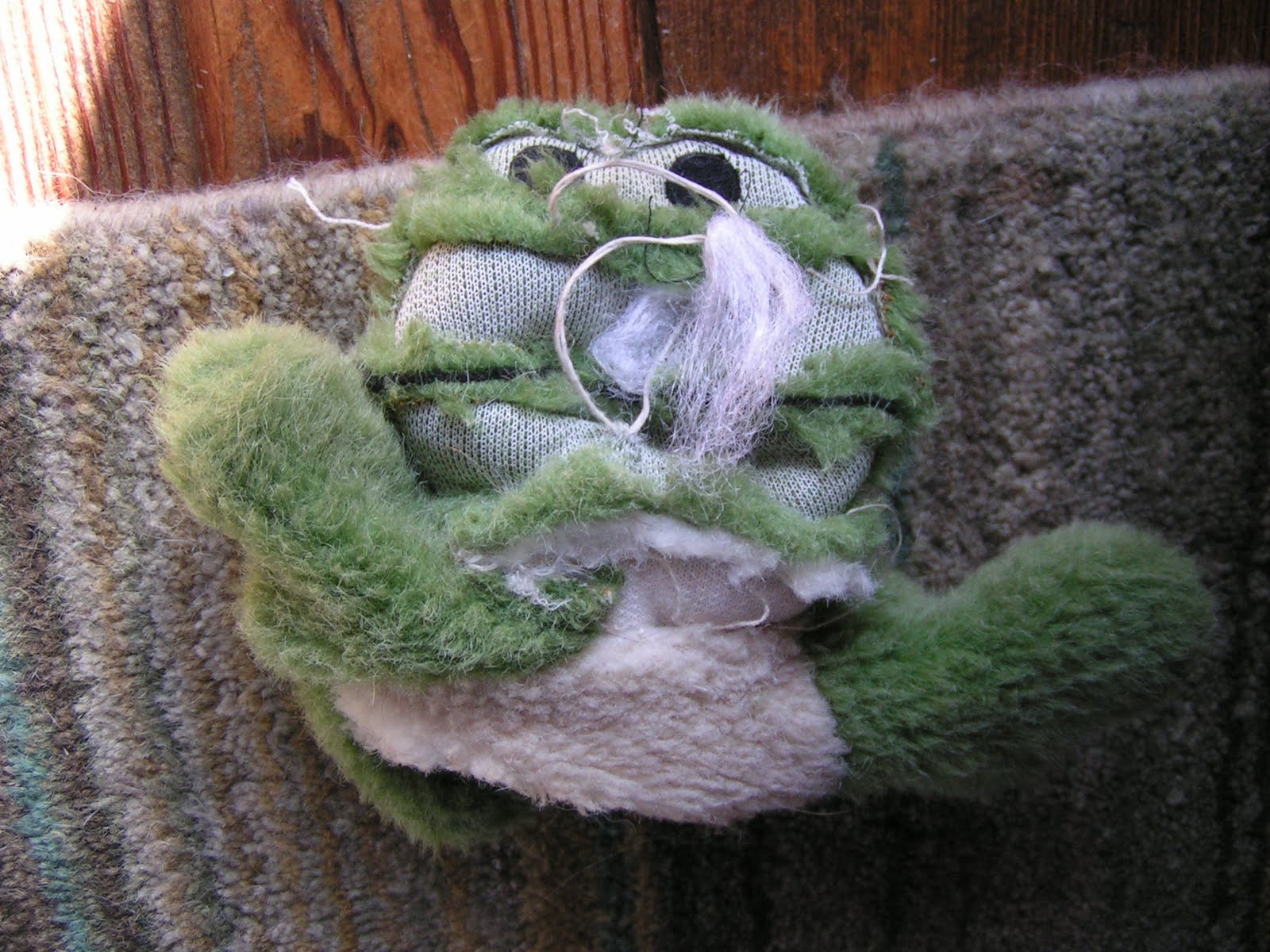
Sigh, and on to the next one. At least it's not the furniture. Sorry, froggy.